World of Warcraft expansions are defined not only by new zones and systems but also by their main villains. These central figures embody the conflicts of each era, providing the climactic battles that players remember for years. Ranking them requires evaluating their difficulty as raid encounters, their story significance in Warcraft lore, and the overall impact they left on the game.
From dragons and demons to old gods and cosmic threats, WoW’s villains have shaped both gameplay and storytelling. Some are remembered for their challenging mechanics, while others are celebrated—or criticized—for their narrative arcs. Together, they form the backbone of WoW’s epic history.
Early Expansion Villains
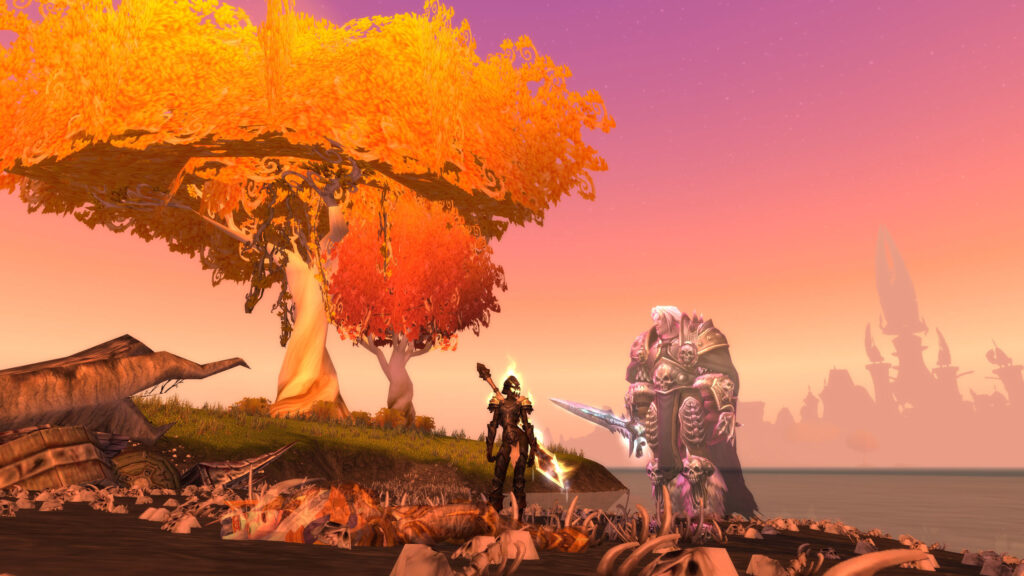
The Burning Crusade introduced Illidan Stormrage as its central villain, though he was more anti-hero than pure evil. His story was iconic, but many argue he deserved more development than he received at the time. Wrath of the Lich King followed with Arthas Menethil, widely considered the most iconic villain in Warcraft history, blending tragic lore with one of the most memorable raid finales in Icecrown Citadel.
These early villains set the bar for expansions. Arthas in particular remains a benchmark for difficulty and storytelling, leaving a legacy that players still measure new villains against. His defeat symbolized the culmination of years of Warcraft narrative, making Wrath a fan-favorite expansion.
Cataclysm and Mists of Pandaria
Cataclysm’s Deathwing brought destruction on a global scale, reshaping Azeroth forever. His raid encounter was challenging, though some felt the final battle didn’t live up to the hype of his world-shattering presence. Despite this, his impact on the world is unmatched, as no other villain literally reshaped continents.
Mists of Pandaria offered a different approach, with Garrosh Hellscream serving as the main antagonist. His descent into tyranny and eventual trial added political depth to Warcraft’s storytelling. Garrosh’s villainy felt personal, rooted in pride and ambition, making him one of the most controversial but memorable expansion villains.
Warlords of Draenor and Legion
Warlords of Draenor featured the Iron Horde and eventually Archimonde, but its narrative struggled with cohesion. While the villains had potential, they lacked the staying power of earlier foes. Players often recall the expansion for its missed opportunities rather than its final boss battle.
Legion, by contrast, delivered on every level. Kil’jaeden’s return and Sargeras’s looming threat created one of the most dramatic expansions in WoW’s history. The culmination on Argus, with players finally confronting the Burning Legion directly, felt both climactic and rewarding. These villains reinforced Legion as one of WoW’s high points.
Battle for Azeroth and Shadowlands
Battle for Azeroth split its villainy between N’Zoth and faction conflicts, with mixed results. N’Zoth had incredible potential as an Old God but was underutilized, leaving some players unsatisfied with his conclusion. Still, his raid fight in Ny’alotha offered challenging mechanics and unforgettable visuals.
Shadowlands introduced the Jailer, a new cosmic-level threat. While powerful in concept, his story execution was divisive. Many players felt his motives were too vague and his introduction too sudden, making him one of the weaker villains in terms of storytelling, even if his raid encounter was suitably epic.
Dragonflight and The War Within
Dragonflight reintroduced the Primal Incarnates as villains, with Raszageth and Fyrakk standing out for their visual flair and dangerous encounters. While not as legendary as past villains, they reinforced the expansion’s themes of elemental chaos and dragon history, adding depth to the narrative of Azeroth’s skies.
The War Within introduces Xal’atath, a mysterious and long-foreshadowed antagonist tied to the Void. Early impressions suggest she could become one of WoW’s most memorable villains, blending shadowy intrigue with immense lore significance. Her true legacy will depend on how the expansion develops her arc.
Villain Ranking Overview
When ranked by difficulty, story, and impact, some villains stand far above the rest. Arthas remains the gold standard, followed by Deathwing and Sargeras for their world-shaping stakes. Kil’jaeden and Garrosh hold strong positions for their memorable fights and complex narratives. At the bottom, the Jailer and Archimonde are often criticized for weaker storytelling or disappointing conclusions.
Ultimately, every expansion villain contributes to WoW’s tapestry, but their legacies vary depending on execution. Some inspired awe and fear, while others left players debating what could have been done better.
- Arthas – Iconic and unforgettable.
- Deathwing – World-shattering impact.
- Garrosh – Complex and controversial.
- Kil’jaeden – Dramatic cosmic threat.
- The Jailer – Powerful but divisive.
Conclusion
Ranking every WoW expansion’s villain highlights the diversity of storytelling in Azeroth. Some, like Arthas and Kil’jaeden, are celebrated as near-perfect examples of villain design, while others like the Jailer show how execution can falter even with strong concepts. Difficulty, narrative, and impact all play a role in how these characters are remembered.
What unites them all is their influence on WoW’s legacy. Each villain, whether beloved or criticized, left a mark on the game’s history. Together, they form the backbone of the adventures players have shared across two decades of expansions, reminding us why World of Warcraft remains a legendary MMO.
Home